


 By Johanna Levy
 Everyone celebrates Thanksgiving in their own way. Some people watch the Thanksgiving Day parade, some people bake pie, some people talk about normal topics. I usually tell anyone who hasn’t already heard of it about this thing called… Giving Tuesday. I’m sure that was a lot of fun for my family. But now comes the real fun, sifting through all that data to see what we can learn.
This was a highly variable year.
Looking at a subsection of 35 nonprofit clients, 65% reported increases in online revenue for Giving Tuesday year over year, about 26% saw a decrease, while the rest were about flat. No matter your results, you have plenty of company.
Some of the growth came from nonprofits adopting and investing in newer channels like paid SMS acquisition. On the other hand, changes in donor behavior and the emergence of AI tools made it more difficult for nonprofits to find the kind of success they have come to expect in channels like email and search. This year, many groups were feeling the urgency (and seeing the benefits) of a program that uses all possible ways to communicate with supporters in sophisticated ways.
Giving Tuesday keeps getting bigger.
According to the Giving Tuesday Data Commons, dollars donated this year increased by 13% year over year, and participants/donors increased by 6%. In many ways, Giving Tuesday is not a stand-alone day, but an entire giving week. Many organizations found ways to extend their campaigns even further before and after the day itself, especially on ads — with many campaigns launching two weeks or more ahead of Giving Tuesday.
And we’re not done yet. We know from Benchmarks that the median nonprofit raised 12% of its revenue the week of December 31, so there’s still time to optimize a few things in your program to make the absolute most of this critical time period.
And, if you found yourself on Giving Tuesday waiting anxiously for revenue to come in, that might be because we’re seeing revenue coming in late in the day. Some organizations received over half their Giving Tuesday revenue after 5pm ET. That’s hopefully after you’ve gone home for the day, so a lesson for 12/31: if you haven’t hit your revenue goals when you close your laptop, don’t despair!
Email results
We saw clients basically evenly split on email returns (half of organizations were up or flat and half were down YoY), but as we have seen email decline as a direct attribution channel year over year, we’ll take it as a win. We did see several clients struggle with deliverability, with Yahoo domains in particular. Here are some tips to get you started cleaning this up before your end-of-year appeals go out.
It’s increasingly hard to stand out in email inboxes with the influx of Black Friday, Cyber Monday, and Travel Tuesday (?) promotions, but tried-and-true tactics like matches and celebrity signers who can really speak to your mission are still helping organizations speak to donors.
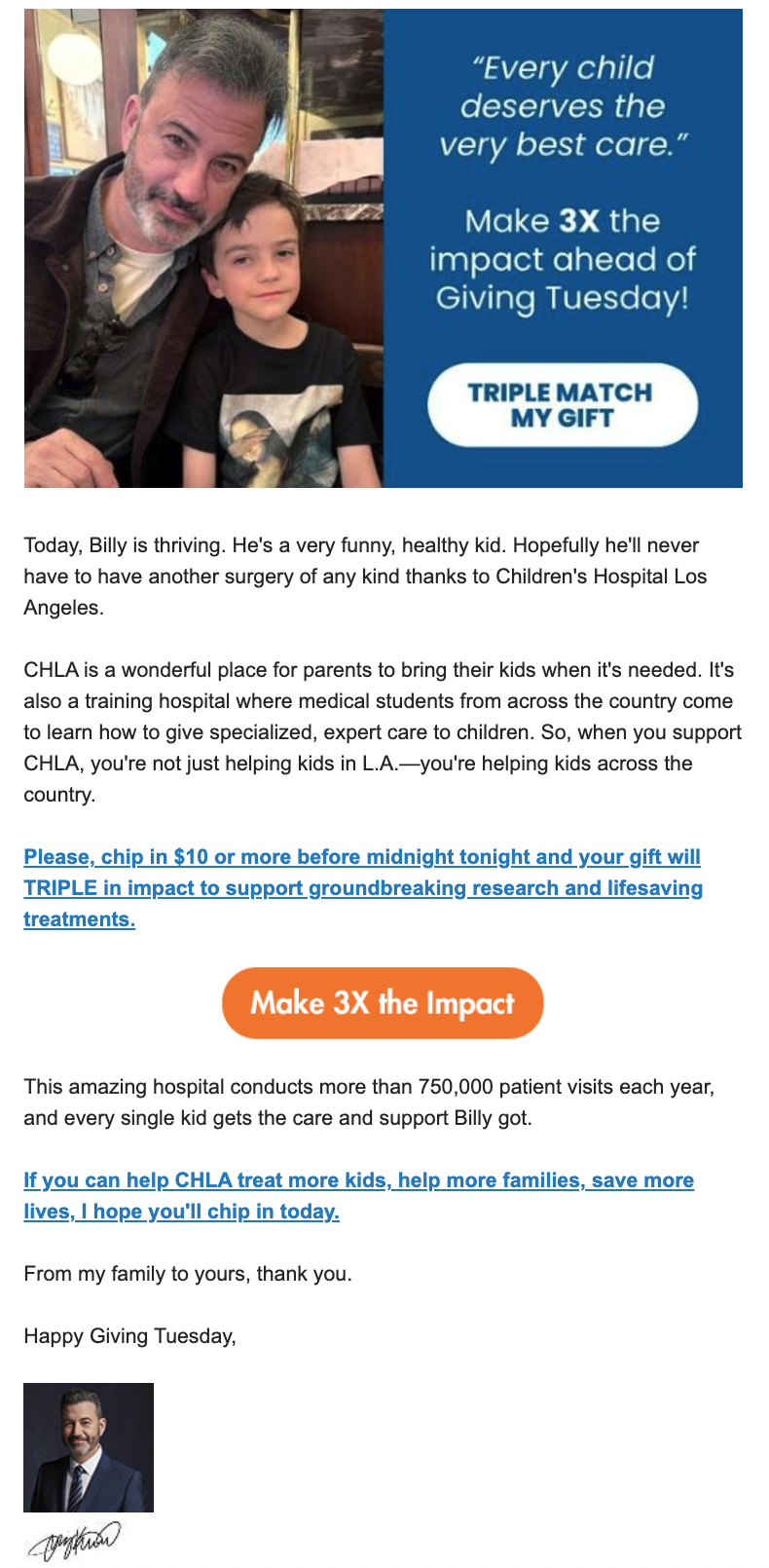
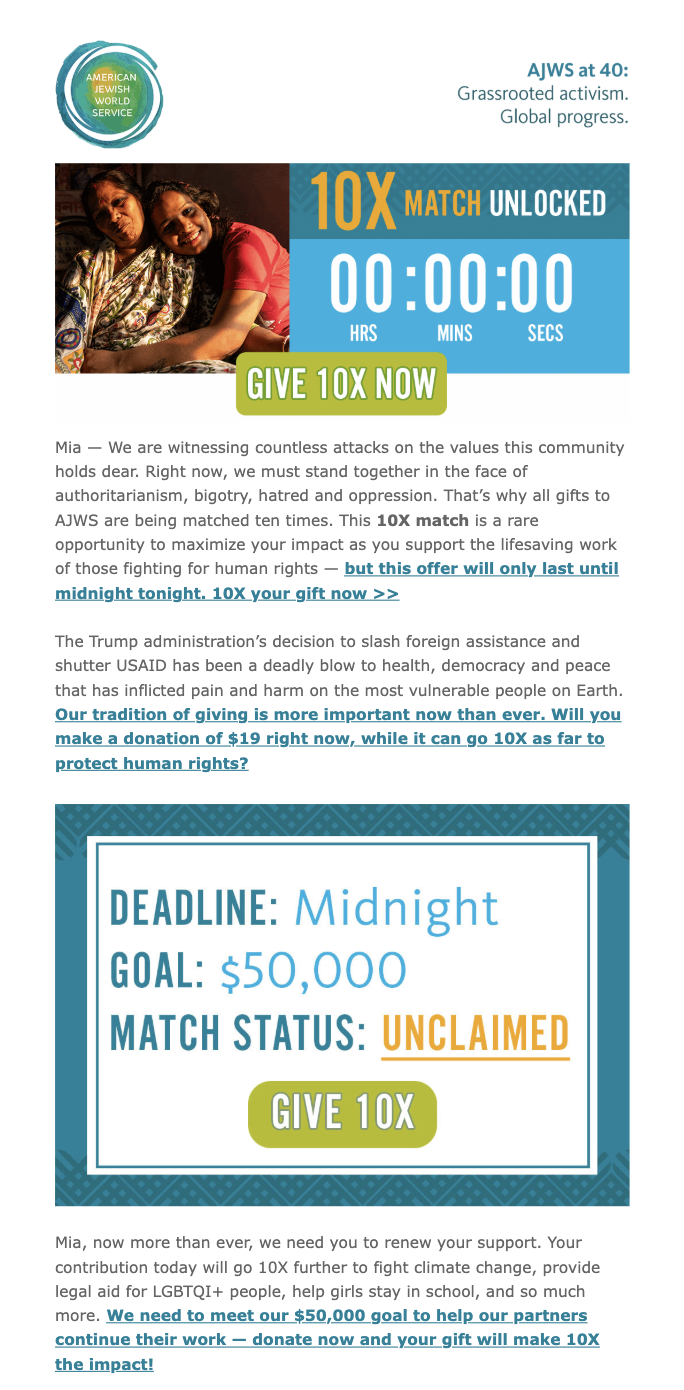
Celebrity signers and strong match multipliers helped emails stand out
What’s going on with ads?
We learned a lot last year with shifts in Facebook’s algorithm and the post-election bump, so we were ready this year to hit the ground running. We’re also seeing shifts in spending. Organizations seem to be spending more on social again, with a big boom after increased adoption of Advantage+.
We’re seeing organizations adopting two very different spend strategies. Some came in aggressive, increasing budgets at midnight the night before, ready to conquer the day. Others began the day with a more measured approach and then scaled significantly beginning around noon eastern time. With either approach, most organizations experienced an increase in cost per donation (CPD) throughout the day.
As average gifts held about steady, the decreased efficiencies were largely due to lower quantities of donors. We saw strong performance with both political and non-political organizations, which was a shift from last year, where the less political organizations were overshadowed due to impacts of the presidential election. However, scalability was more limited this year for organizations that experienced an influx of giving as related to the election or other major world events last year. The biggest takeaway was that the organizations that both came in with a plan and reacted properly in real time to opportunity had the best success.
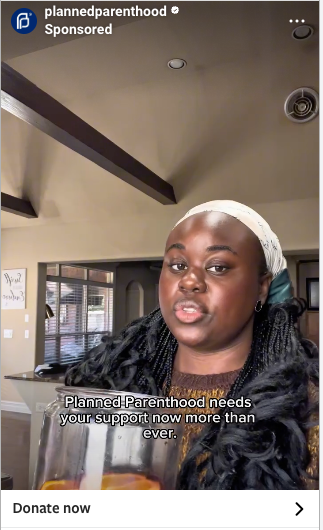

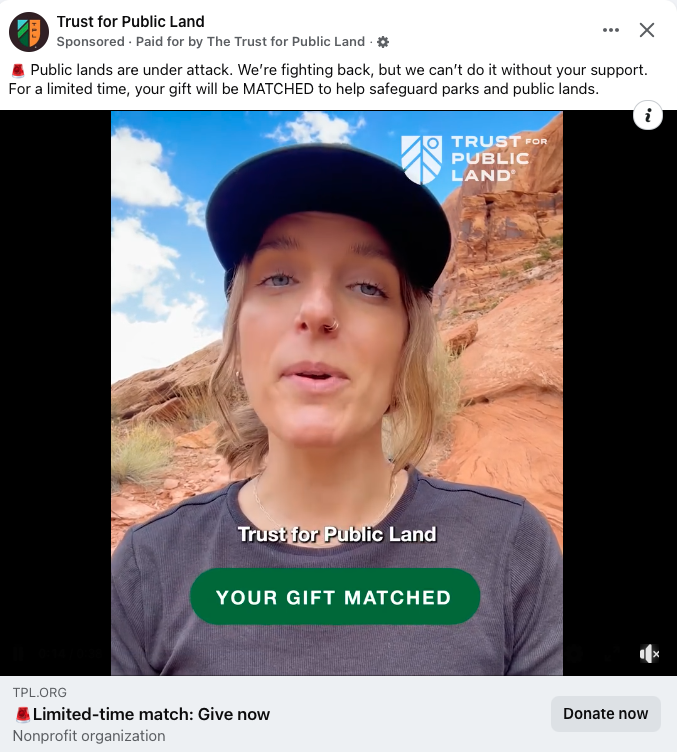
We’re continuing to see strong performance from influencers in our fundraising ad campaigns
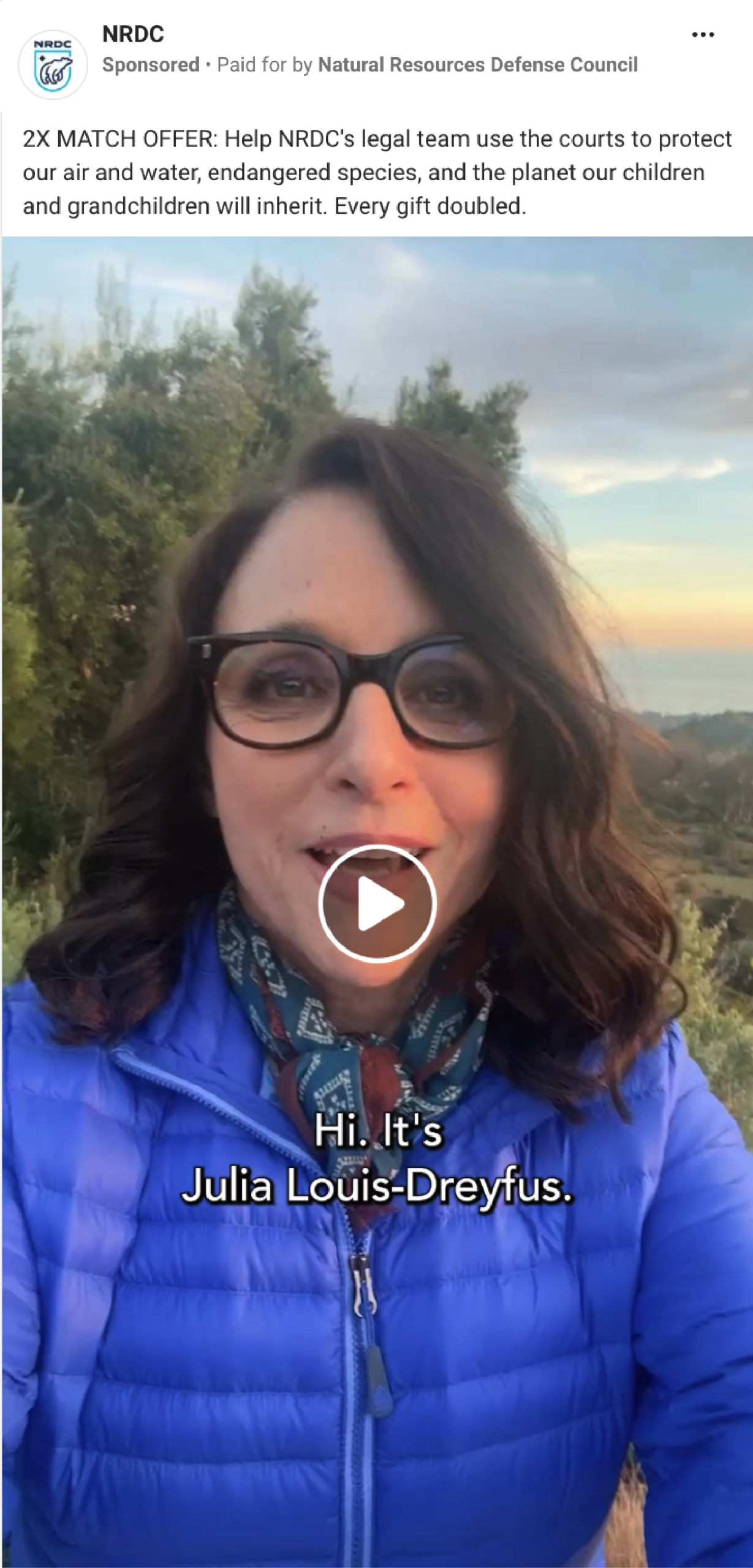
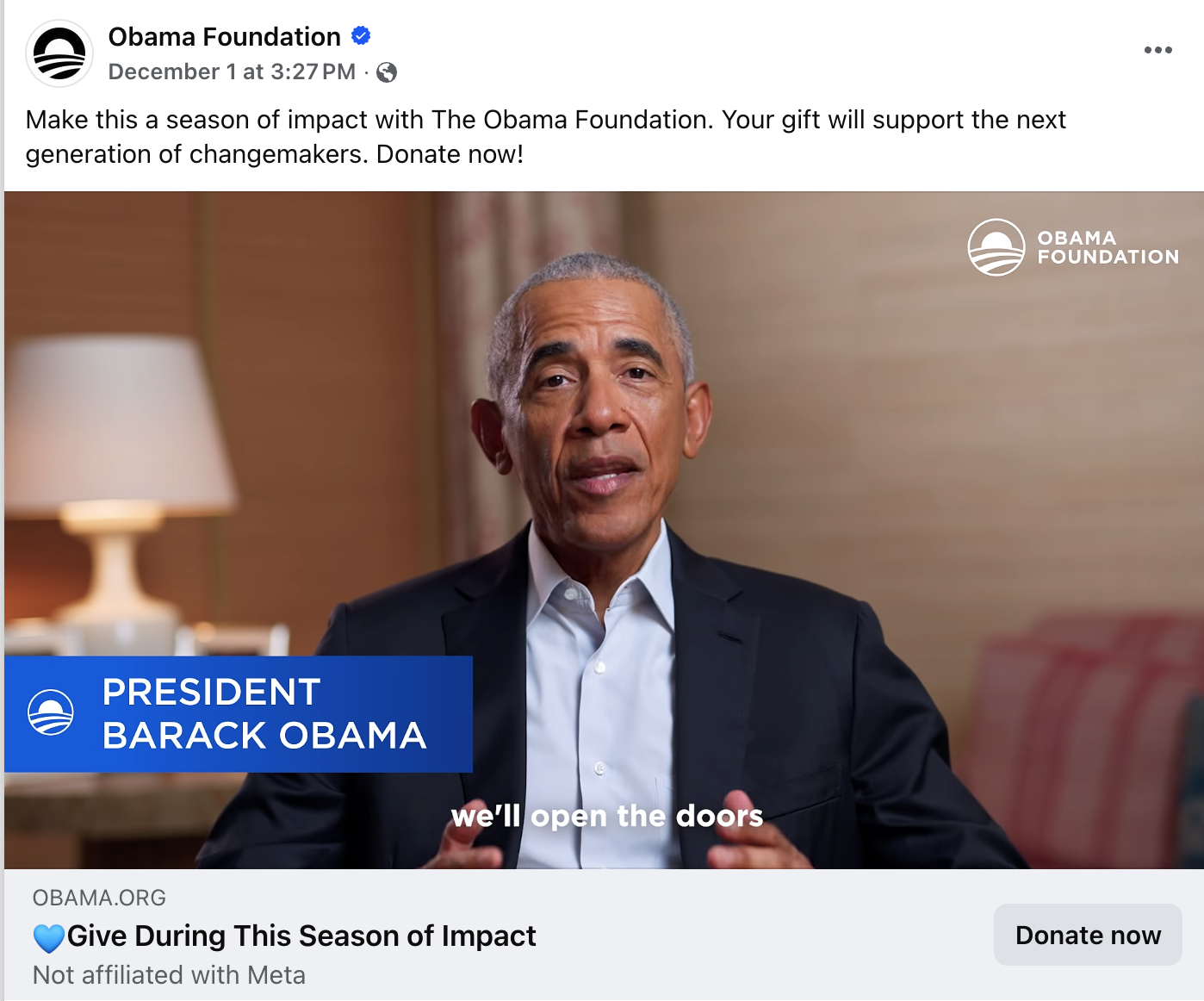
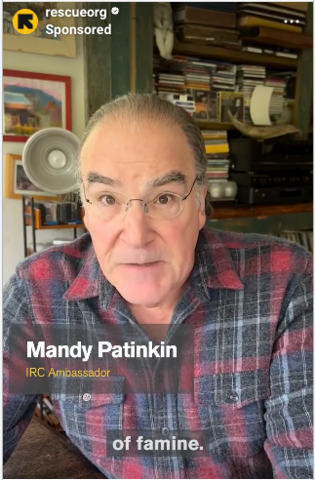
Direct-to-camera ads from celebrities were also strong performers


But don’t rule out eye-catching graphic ads, which are still driving strong return.
AI has certainly been a factor more this year compared to previous years, and we’re still unpacking exactly what that means for performance. While the web traffic apocalypse some people are predicting coming from AI overviews isn’t here yet, it does look like overall web traffic for most organizations’ homepages is down. And it seems like search ads may be driving less of this traffic. We don’t have an analysis of the December timeframe yet — but take a look at our initial look at how AI is affecting search traffic and giving.
Audio is another area that has grown in adoption for ads and is driving strong performance, especially for what we might consider to be more of a top-of-funnel placement.
Impressive Mobile metrics
Nonprofits that have invested in growing their mobile lists over the last few years are starting to see major returns. On fundraising-focused days like Giving Tuesday and that all-important December 31 deadline, text messages can have a big impact. In our Benchmarks study, we saw Mobile messaging (a.k.a. text messaging or SMS/MMS) subscriber list size increased by 8% year over year. The average click-through rate for mobile fundraising messages was 2.82%, and response rate was 0.14%. Both of these numbers represented significant increases from the previous year, and they also exceeded email CTR and response rates.
While Mobile messaging accounts for a small share of total revenue for most nonprofits (on average, about 1% of all online revenue in our most recent Benchmarks Study), some organizations routinely raise more from a single text message than a full-file email. If that’s not you (yet), it’s probably time to start growing your mobile list more aggressively.
Another very big trend is adoption of paid SMS acquisition, which performed exceptionally well for many orgs (above positive ROAS). This channel not only helped drive new donors, but also through data appends, we were able to reach current donors who we did not already have a mobile number on file through SMS. This tactic proved wildly successful, with some clients reaching as high as a 300% return on investment.
Mobile optimization matters as we’re consistently driving more and more traffic via mobile.
There are only 20 days until 12/31, but that’s plenty of time to add a few mobile messages to your strategy and really take stock of your ad mix and recent performance.
We’ll be back with you in early January for a data deep dive.