


 By Miranda Carter and Matt Lurrie
 Your donors want you to speak out to protect democracy and get involved in nonpartisan voter education. We know, because we asked them.
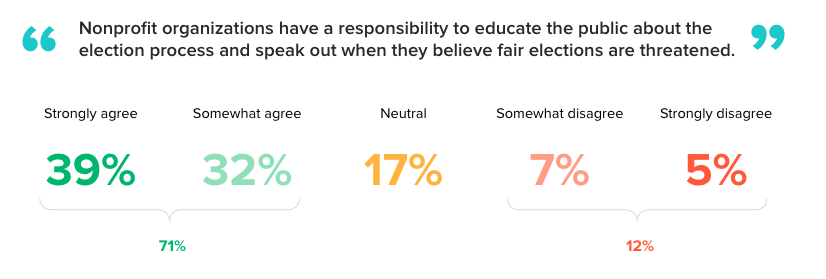
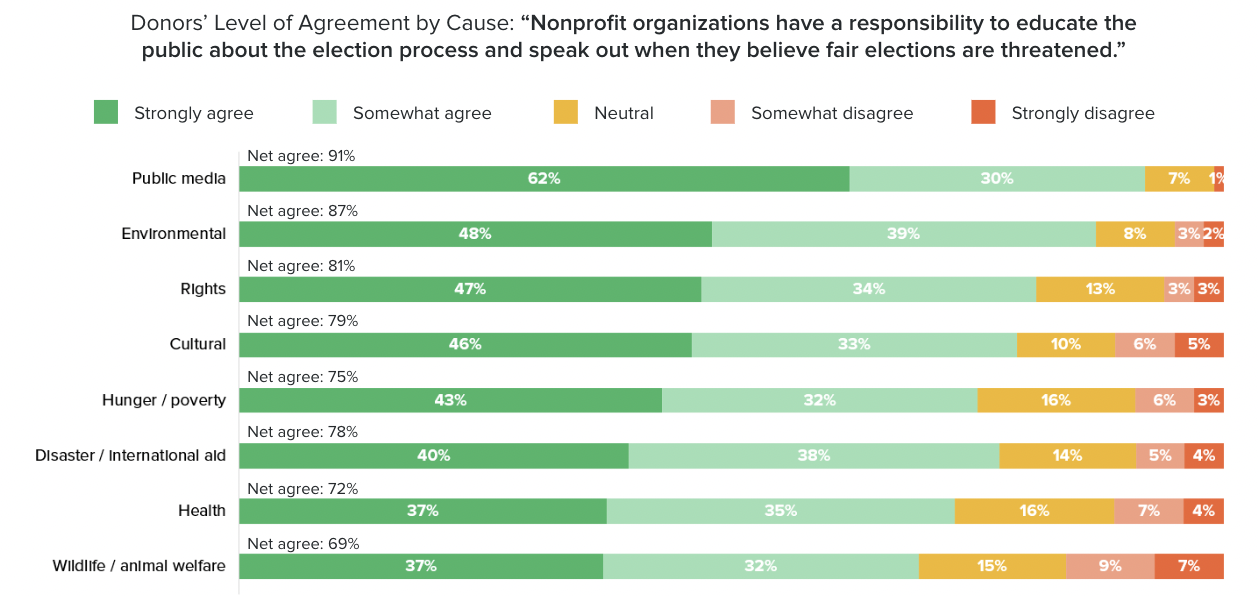
M+R just wrapped up a study to understand how nonprofit donors across the ideological spectrum want the organizations they support to respond to threats to democracy. The results were crystal clear: the majority of donors agree that nonprofits have a responsibility to educate the public about the election process AND speak out when they believe fair elections are threatened.
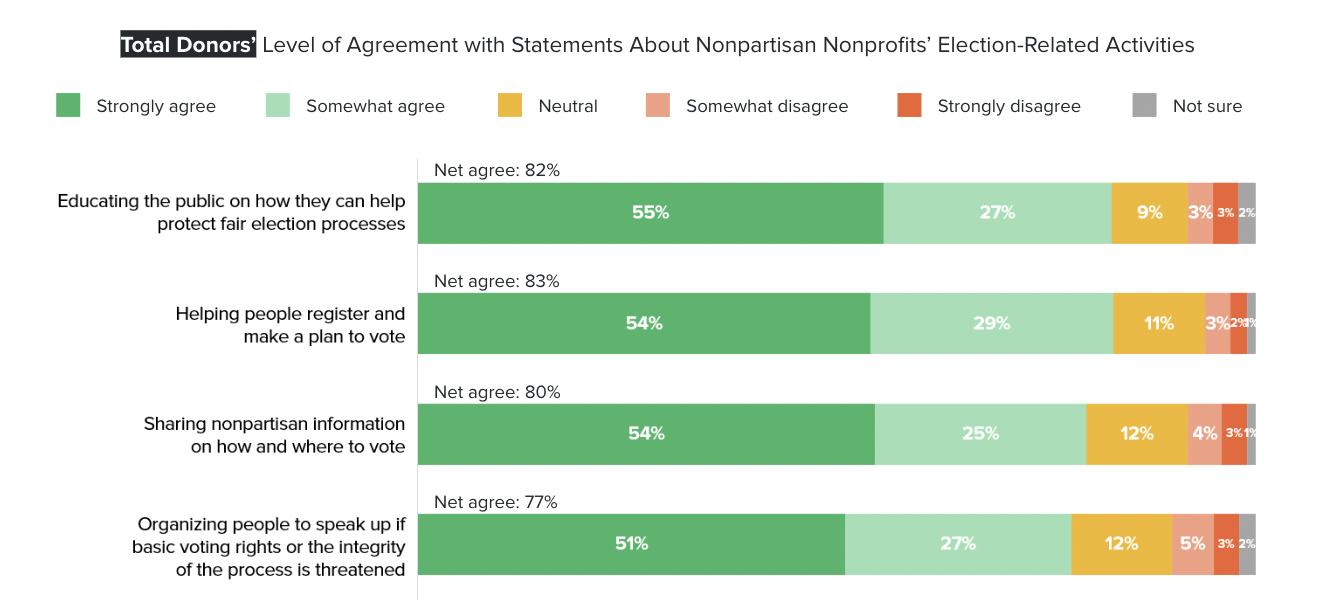
And that’s not all. The majority of donors strongly agree that nonpartisan nonprofits should engage in a range of nonpartisan election-related activities to protect fair election processes, help citizens navigate the voting system, and ensure the integrity of the democratic process is upheld.
Regardless of your organization’s mission, nonpartisan activities in democracy’s defense may be the most effective way for you to protect elections and deliver the kind of action the public and your supporters are asking for.
Voter education, registration, and GOTV.
We can’t simply assume that the public is ready to vote. Voter roll purges, new ID requirements, misinformation, and a fear of physical violence all have the potential to stop a vote from being cast.
As you communicate with the public and your organization’s lists about the coming elections, you can rely on tried and true nonpartisan tactics:
- Encourage everyone to register to vote (or check to make sure their prior registration is up to date). Organizations like vote.org provide off-the-shelf, trustworthy resources so you don’t need to reinvent the wheel.
- Provide clear, concise voting information (early voting dates, vote by mail deadlines, in-person voting requirements, etc). With state legislatures and courts changing voting requirements and early voting dates, getting correct information to a motivated voter is crucial.
- Promote Voters’ rights, including freedom from intimidation and electioneering.
Bonus: research shows that voters who register in a non-general election year (primaries, midterms, off-years) are more likely to turn out in a general election. It’s never too early to start planting the seeds for 2028.
Poll worker recruitment
In highly salient elections, local news loves to visually show voter enthusiasm with b-roll of long lines at polling places. Let’s be clear: that’s a policy failure.
Understaffing doesn’t just lead to those long lines; fewer than half as many polling places were open in 2024 as in 2018. Every extra minute in line or driving to another polling station is a voter disenfranchised.
Organizations like Power the Polls are great partners to help recruit and train your supporters for this vital work.
Over the past year, we’ve seen key decision-makers in business, media, academia, big fancy law firms, and more wrestle with the danger of speaking out for free and fair elections. For nonprofit leaders looking to meet the public and supporters where they are, the bigger question is: are you speaking out enough?
Interested in talking about your election plans? Drop us a line!